
St. Clair County Criminal Court Cases
Criminal court cases in St. Clair County can pass through two trial courts. The 72nd District Court handles misdemeanors within its jurisdiction, arraigns felony defendants, sets bond, and holds probable-cause conferences and preliminary examinations. When a felony is bound over, the 31st Judicial Circuit Court becomes the trial court for the information, plea or trial, sentence, and later motions. A search limited to one court can therefore show only half of a felony’s path.
The court clerk keeps the official case file. MiCOURT is a useful public index, but its terms state that the online view is informational. Pleadings, certified judgments, audio, transcripts, and older material may require a direct request. St. Clair County does not use a separate Texas-style municipal criminal court system. City ordinance cases and civil infractions may also start in district court.
St. Clair County’s Two-Court Trail
A felony can create a district number and a circuit number. The district record begins with the complaint and first appearance. After a waiver or probable-cause finding, bind-over sends the felony to circuit court, where the prosecutor files an information. A district entry marked dismissed does not always mean the prosecution ended. It may record the transfer, an amendment, or a later refiling.
The Michigan trial-court overview helps place these roles in the statewide system. Its court structure is also a useful check when a result appears under an unexpected court. The official court view below illustrates why identifying the correct level comes before reading the outcome.
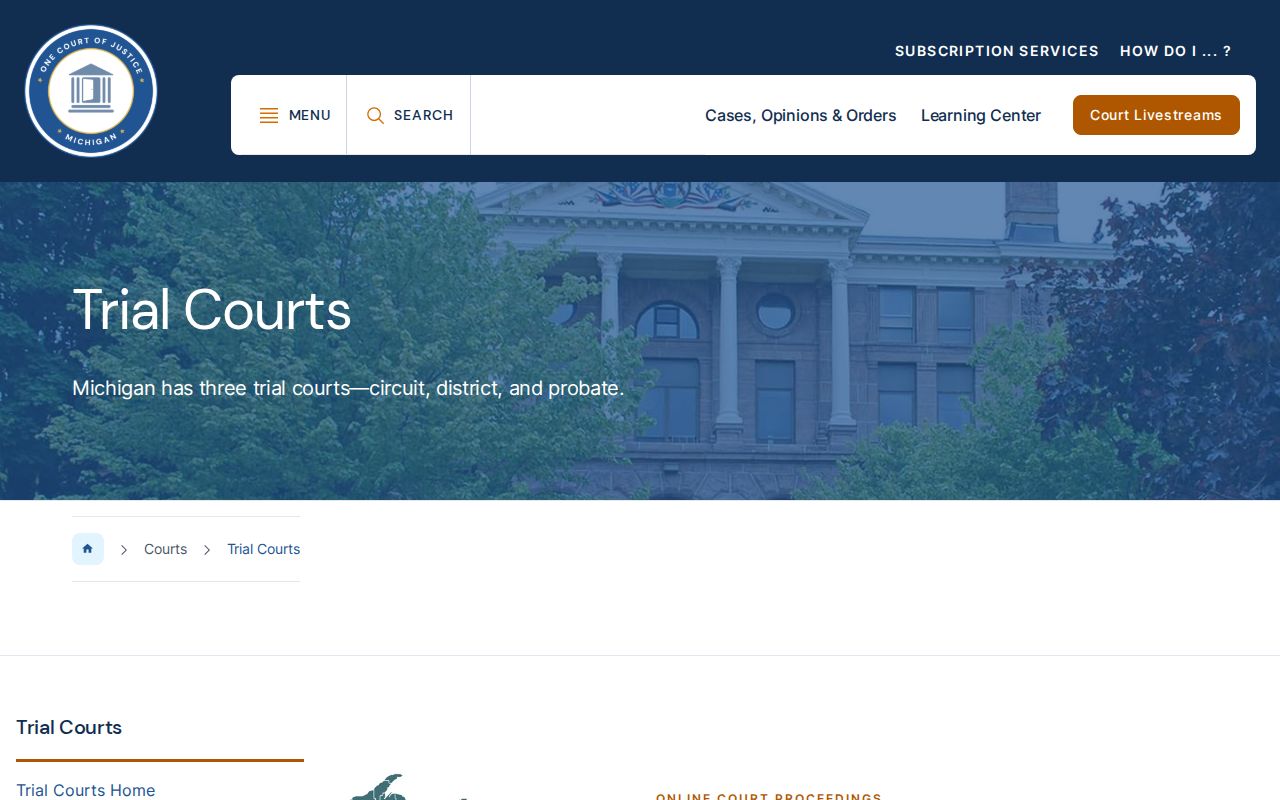
For St. Clair County criminal court records, “D72” points to the district stage and “C31” points to the circuit stage.
Searching St. Clair County Case Records
Begin with MiCOURT Case Search, then confirm any fact that matters with the clerk. Names work best with an exact date of birth when the interface accepts it. A complete case number is stronger because common names can return several people. Follow both court levels when the file concerns a possible felony.
- Accept MiCOURT’s terms and select the 72nd District Court for misdemeanors or a felony’s first stage.
- Choose the participant-name or case-number search and enter the best identifiers available.
- Review the result list for court, filing date, case type, and status before opening a case.
- Repeat the search in the 31st Circuit Court when district entries show bind-over or felony transfer activity.
- Ask the clerk for the official file, certified disposition, audio, or an older document that the public view does not supply.
| Field Label | Type | Required | Notes |
|---|---|---|---|
| Search by | Tab/control | Yes | Name or Case Number |
| Last Name | Text | Name search | Use the legal spelling |
| First Name | Text | Usually optional | Narrows common names |
| Date of Birth | Date | Optional | Use MM/DD/YYYY when offered |
| Case Number | Text | Case search | Use the complete court format |
| Court | Selected context | Yes | D72 or C31 |
| Case Category | Filter | Optional | Options depend on the court |
MiCOURT prohibits bulk downloads. Public results also omit nonpublic case types and protected details. The clerk, not a copied search result, controls the official record.
St. Clair County’s Seven-Year Filter
Some Michigan courts display criminal convictions only when sentencing occurred within the prior seven years. That display limit does not erase an older court file. If a known St. Clair County case produces no online result, check both D72 and C31, verify the case-number format, and contact the clerk. Ask by case number, document title, and filing date if those facts are known.
The St. Clair County court document request is the direct path for material beyond the online view. The source capture below represents the clerk channel rather than a third-party case database.
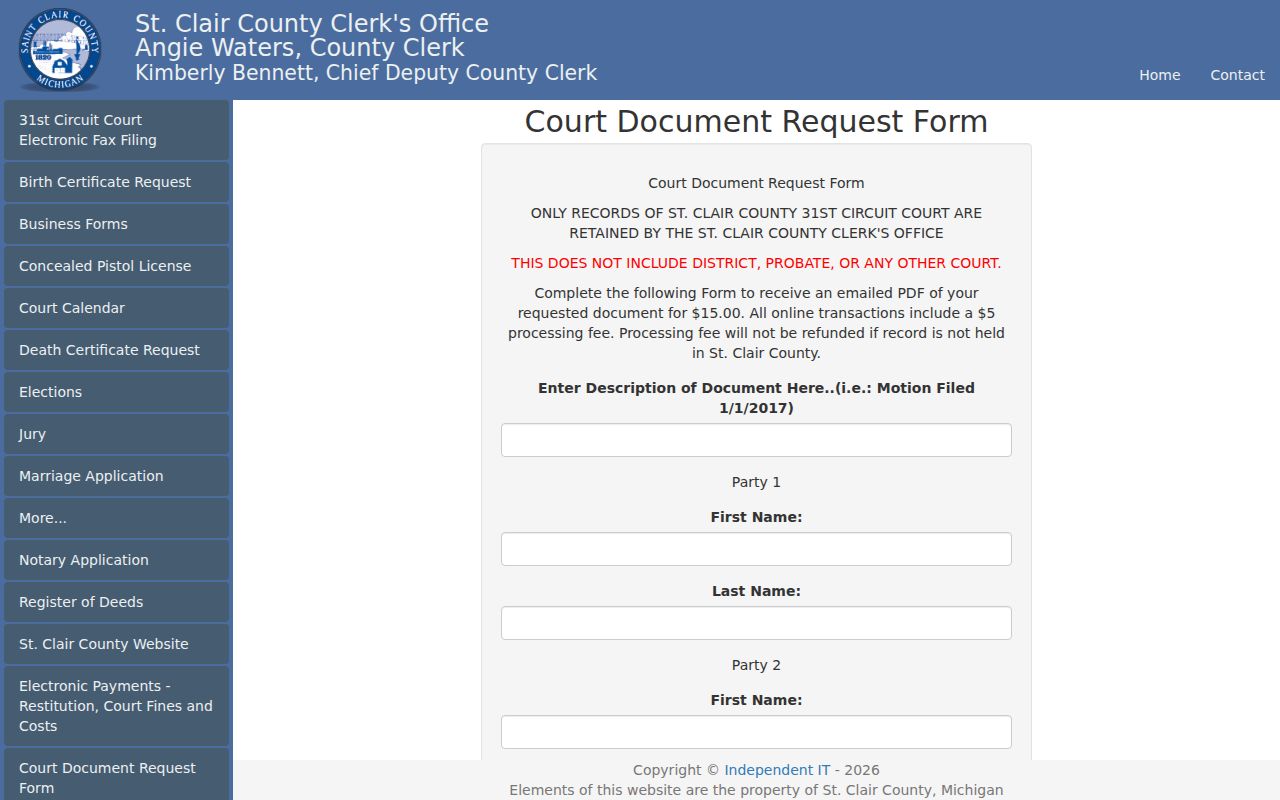
Older files and certified copies should be requested from the record custodian, with enough detail to locate the exact St. Clair County criminal case.
Inside a St. Clair County Case File
A court file centers on prosecution events, not jail intake. It can show how the charge changed, which judge handled the case, what plea was entered, and how each count ended. The register of actions is the time-ordered event list. Read it with the charging document and judgment because one docket label rarely tells the full story.
| Case Number and Court | Identifies D72 or C31, the filing, and the correct clerk. |
|---|---|
| Charging Document | The district complaint or circuit information and cited Michigan statute. |
| Register of Actions | Dated filings, hearings, motions, appearances, and court actions. |
| Charge Detail | Description, level, count, attempt marker, plea, and disposition. |
| Disposition and Judgment | Conviction, dismissal, acquittal, transfer, or another recorded outcome. |
| Sentence | Public sentencing terms, dates, and monetary balance where displayed. |
Protected identifiers, victim or minor information, presentence material, and nonpublic treatment records are not ordinary public fields. Online documents are not guaranteed even when the docket entry is visible.
St. Clair County Charge-Level Checks
Read the charge description, MCL citation, and final outcome together. Michigan does not use one simple misdemeanor ladder for all offenses. Individual statutes set penalties, while felony guideline classes serve a different sentencing function. A “high-court misdemeanor” is generally processed through the felony path because it authorizes more than one year of imprisonment.
MiCOURT warns of a display issue involving attempts under MCL 750.92. Some attempted offenses may appear as “FELONY” even when subsection (3) makes the attempt a misdemeanor. The fix is to open the cited statute and compare it with the judgment. Call the St. Clair County clerk if the public label and filed disposition do not align.
Note: A portal label is a search aid, not a substitute for the charging statute and signed judgment in the official court file.
How a Criminal Case Moves
A typical St. Clair County felony begins with an investigation, arrest, or warrant. The district court then receives a complaint, conducts arraignment, addresses bond, and schedules a probable-cause conference and preliminary examination. A waiver or probable-cause finding leads to bind-over. The prosecutor files the circuit information, and the circuit court handles arraignment, motions, plea or trial, sentencing, and postjudgment work. Misdemeanors ordinarily remain in district court.
Case flow: Charges Filed › Arraignment › Pretrial › Plea or Trial › Disposition › Sentencing
The arresting agency’s first label can change at charging. For that reason, a booking entry should not be used as the final account of a St. Clair County criminal court case. The St. Clair County arrest lookup explains the earlier agency and jail records, while the court file supplies the adjudicated result.
MiCOURT Versus St. Clair Files
MiCOURT is fast and broad, but the clerk’s file is authoritative. The portal can show the court, case number, filing date, judge, case status, charge, statute, plea, disposition, sentence, scheduled events, attorney appearances, and public balance. It may not offer the pleading or judgment for download. It can also lag a recent filing.
The C31 MiCOURT search provides the circuit-side starting point. The captured official search view below is useful for recognizing the court context before entering a name or number.
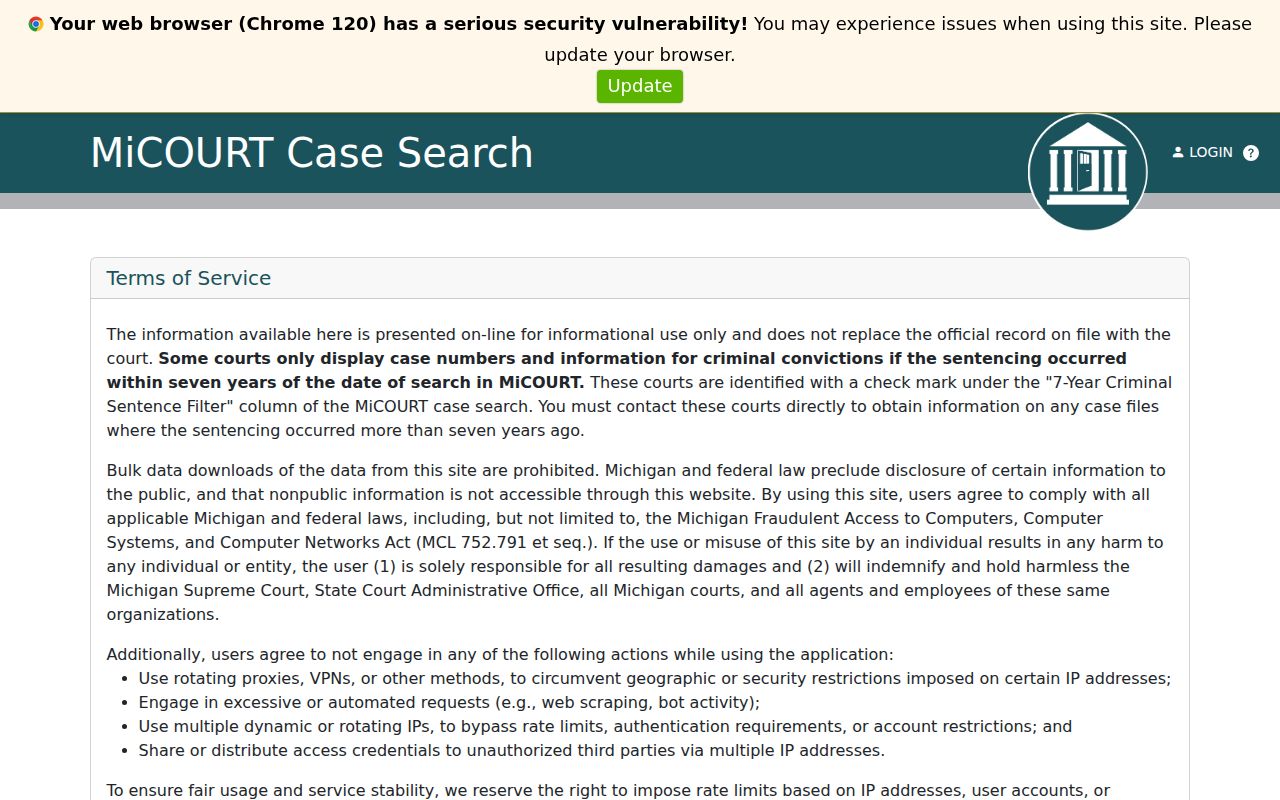
A public result supports case discovery. Certified judgments and full file questions still go to the St. Clair County clerk.
Missing St. Clair County Dispositions
A blank outcome should not be read as guilt or innocence. First, compare the district and circuit records. The district case may stop because the felony moved to circuit court. Next, look for a plea, dismissal, acquittal, or sentence in the later register of actions. If the result remains unclear, obtain a certified disposition from the clerk.
A court result and an MSP repository result answer different questions. ICHAT collects reportable Michigan history, while the St. Clair County case file documents a specific prosecution. When ICHAT lacks a disposition, certified court material can support the MSP correction or update process. The court file should be read before drawing any conclusion from an incomplete repository cycle.
Case Record Access and Restrictions
Michigan Freedom of Information Act requests are not the route for judicial files. Michigan excludes the judiciary from FOIA’s public-body definition. Instead, MCR 8.119 governs court records. It permits any person to inspect an unrestricted case record. A court may not charge to inspect or retrieve public case history, though it may charge actual reproduction costs and an authorized certification fee.
Juvenile and child-protective matters, protected personal identifiers, certain victim information, and sealed or set-aside material have limits. A missing online result may reflect a display rule, lawful restriction, or data delay. Contact the clerk rather than attempting to bypass it.