
Checking Criminal History in St. Clair County
No single database equals a complete St. Clair County criminal record. Start with the question. MiCOURT holds the public case view for the 72nd District Court and 31st Circuit Court. The county jail roster answers whether someone is in current local custody. An incident or arrest report stays with the sheriff, city police, MSP, or other agency that wrote it. ICHAT is the Michigan State Police public repository product, with its own scope and limits.
Good identifiers prevent a false match. Keep the legal name, exact birth date, known middle name, spelling variants, event date, agency, and case or incident number close at hand. A common name alone is weak proof. Use this order to build and verify the record:
- Search the 72nd District Court for misdemeanors and the first stage of a felony case.
- Search the 31st Circuit Court when the district docket shows a felony bind-over.
- Check the current county jail roster when custody or a new booking is the main concern.
- Ask the arresting agency for the incident or arrest report under Michigan FOIA.
- Use ICHAT for its public statewide subset, then obtain certified court material when an outcome matters.
MiCOURT warns that its display is informational. The clerk’s file controls. Older cases may also fall outside an online display filter, so a blank result should lead to the court counter or phone line, not a claim that no case exists.
St. Clair County’s Split Records System
Two Port Huron locations hold different parts of St. Clair County criminal history. The courthouse at 201 McMorran Boulevard is the place for filed charges, registers of actions, judgments, and certified court copies. The Sheriff’s Office and Correctional Facility at 1170 Michigan Road is the place for sheriff reports, booking records, current custody questions, and sheriff FOIA requests. The County Clerk serves as clerk of the 31st Circuit Court, while the 72nd District Court handles misdemeanors and felony preliminary work.
The split is not just about buildings. A city police department can hold the event narrative even when the county jail holds the booking and a county court later holds the criminal case. MSP CJIC then compiles reportable state history. This record flow is best read as Agency report → Jail booking → District court → Circuit court when bound over → MSP repository disposition.
| Question | Best St. Clair County channel | What it adds |
|---|---|---|
| What did police report? | Arresting agency records unit | Incident narrative and arrest basis, subject to redaction |
| Is the person in local custody? | County jail roster or sheriff phone line | Current booking and custody status |
| What charge was filed? | D72 and C31 court records | Court charge, events, disposition, and sentence |
| What reached the state file? | MSP ICHAT or fingerprint review | Repository information within the chosen product’s scope |
Michigan Official Background Checks
Michigan State Police offers two different paths for reviewing Michigan criminal history. ICHAT is a name-based public search. It asks for first and last name, date of birth, sex, and race, and costs $10 for each search. Its public result can include Michigan felony arrests and convictions plus serious-misdemeanor convictions reported to MSP. A search does not include warrants, federal or tribal matters, traffic records, juvenile records, local misdemeanors, suppressed entries, or records from other states.
A fingerprint personal-record review is for a person checking their own fuller Michigan record. A Michigan resident can ask a local law-enforcement office to take prints on an RI-008 card, then mail the card and required material to MSP CJIC. MSP lists a $30 processing fee, apart from any local print fee, and says the mail process can take three to five weeks. Fingerprint submissions required by statute or rule use an approved Live Scan agency and the purpose codes supplied by the authorized body.
The Michigan State Police criminal-history overview shows how the state repository separates its public and identity-based products.
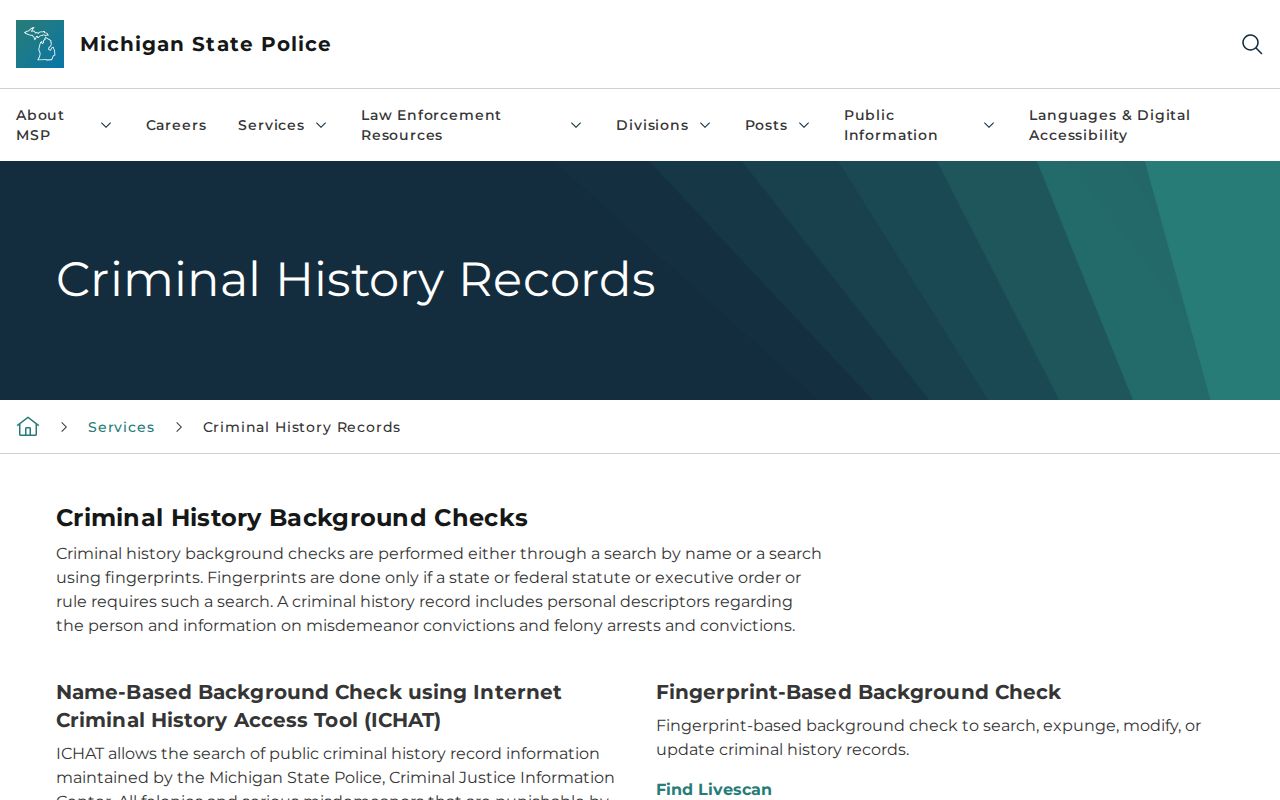
That distinction helps a St. Clair County searcher choose a source by scope rather than treating every background check as the same record.
ICHAT and St. Clair County Records
ICHAT is useful, but a “no record” response has a narrow meaning. It does not say that a person has never been arrested, charged, cited, or held. It says the search found no public repository information matching the data and rules of that product. A local misdemeanor may remain outside ICHAT while the 72nd District Court still has a case. A recent booking may appear at the jail before the prosecutor files a complaint. A set-aside matter may be suppressed by law.
When an ICHAT entry lacks a disposition, obtain the certified judgment or register of actions from the court that decided the case. MSP has a correction and update route for record subjects. A name match also needs care because ICHAT is not fingerprint identification. Compare the full name, birth date, descriptors, arrest cycle, court, and charge path before drawing a conclusion.
| ICHAT field | Required? | Search note |
|---|---|---|
| First and last name | Yes | Use the subject’s legal spelling |
| Date of birth | Yes | An exact date sharply narrows matches |
| Sex and race | Yes | Choose from portal-controlled values |
| Middle name | No | Useful when names are common |
| Alias | Separate search | Another spelling can require another paid search |
Criminal Record Types
St. Clair County criminal records are separate products made at different points in a case. They can overlap without matching line for line. The initial arrest label can change when the Prosecuting Attorney reviews the event. A jail charge describes intake, while a judgment describes the result that a court reached. Knowing the product keeps a reader from using one record to answer a question it was not built to answer.
- Incident and arrest reports come from the sheriff, city police, MSP, or another arresting agency.
- Booking records come from jail intake and can show custody, bond, agency, and alleged charges.
- Court case files contain pleadings, events, orders, outcomes, sentences, and public financial entries.
- Repository history compiles reportable Michigan arrest cycles and reported court dispositions through MSP CJIC.
- Warrant, supervision, corrections, and registry records remain with the issuing court or the agency assigned by law.
Juvenile records and protected victim or personal information are not ordinary public-search material. A set-aside record also becomes nonpublic, though MSP keeps a limited nonpublic record for uses named in Michigan law.
St. Clair County Jail Records
The official St. Clair County current-booking search is free and needs no account. It accepts a last name, first name, or booking number and states that data refreshes during the day. A public profile can show the name, booking number, age, gender, booking date, a booking photograph, and separate groups for current, sentenced, and satisfied charges. Charge cards can include the description, bond, court, and agency.
The roster is a live custody tool, not a permanent St. Clair County criminal history archive. A released person can drop from view, and the first intake charge can differ from what prosecutors file. For older material, send a focused sheriff request with the approximate booking date and identifiers. For a person under Michigan prison, parole, or state felony probation authority, use OTIS instead of the county roster.
Current custody is only one stage. The fuller St. Clair County arrest lookup explains how the agency report, booking, and court file fit together.
Note: A booking record reports an arrest and custody event, not proof that a court found the charge true.
Inside a St. Clair County Criminal Record
The meaning of a field depends on the record. A repository file is organized around identity and arrest cycles. A court file is organized around one case and its event history. A booking file is organized around intake and custody. Reading the source label first prevents an arrest charge, prosecutor charge, and final disposition from being blended into one claim.
| Name & Identifiers | Legal name, aliases, birth date and descriptors; a repository can also use Michigan SID, FBI numbers, and fingerprints. |
|---|---|
| Arrest / Booking Data | Agency, event date, tracking or booking number, intake charge, bond, and release or transfer status. |
| Charges & Statutes | Offense description and MCL citation at arrest, filing, amendment, or judgment stage. |
| Disposition | Outcome such as conviction, dismissal, acquittal, or transfer, with the reporting court and date. |
| Sentence | Terms imposed after conviction, including custody, probation, fines, costs, or restitution when public. |
| Custody / Supervision Status | County jail status or selected MDOC prison, parole, and felony probation information. |
These terms appear often in St. Clair County court records:
- Register of actions
- The court’s dated list of filings, hearings, orders, and other case events.
- Bind-over
- The move of a felony case from district court to circuit court after waiver or a probable-cause finding.
- Disposition
- The outcome of a charge, which may be a conviction, dismissal, acquittal, or transfer.
- Information
- The prosecutor’s circuit-court charging document after felony bind-over.
MiCOURT St. Clair Case Records
A complete felony record can require two MiCOURT searches. The 72nd District Court handles the complaint, arraignment, probable-cause conference, and preliminary examination or waiver. If the matter is bound over, the 31st Circuit Court holds the information, circuit arraignment, motions, plea or trial, sentence, and later activity. A district entry that says “dismissed” must be read in context because it may mark a transfer rather than an acquittal.
MiCOURT can display the court, case number, filing date, status, judge, charge description, MCL citation, charge level, plea, disposition, sentence, scheduled events, attorney appearances, and register-of-actions entries. Protected identifiers do not belong in the public view. Documents are not always downloadable, and certified copies come from the clerk. The St. Clair County criminal court cases resource follows that district-to-circuit case path in depth.
Michigan court notices also flag a charge-level display issue for some attempts under MCL 750.92. If a label and statute conflict, read the statute and judgment or ask the clerk. Do not rely on the screen label alone.
Public Access Laws in Michigan
St. Clair County police and sheriff records follow the Michigan Freedom of Information Act. Court files do not. Michigan excludes the judiciary from FOIA’s public-body definition, so public court inspection runs through Michigan Court Rule 8.119. That rule allows inspection of unrestricted case records and bars an inspection or retrieval fee, though the court may charge actual reproduction and certification costs.
The record creator can still redact or withhold material protected by law. Common limits include an active investigation, juvenile information, victim identity, medical facts, LEIN data, and protected personal identifiers. A written sheriff FOIA request should describe an existing record with enough detail to locate it. Michigan generally calls for a response within five business days and allows a written extension of up to ten more business days, but that reply date is not always the production date for a large request.
Key Michigan laws:
MCL 15.231 states Michigan FOIA’s policy of public access to executive-agency records.
MCL 15.232 excludes the judiciary from FOIA’s public-body definition.
MCR 8.119 governs access, inspection, copies, and restrictions for Michigan court case records.
MCL 28.242 directs reportable arrest and identification information into the state and federal record chain.
St. Clair County Warrant Records
ICHAT does not show warrants, and the official sources reviewed did not provide a reliable countywide active-warrant database. A public docket may contain a warrant entry, but it can lag issuance or cancellation. Real-time confirmation must come from the issuing court or responsible agency. For a district or bench warrant tied to a case, contact the 72nd District Court. For a circuit felony file, contact the 31st Circuit Court clerk. The Sheriff’s Office can route a county enforcement question at 810-987-1700.
A focused sheriff FOIA request can seek releasable warrant information, but sealed warrants, active investigative material, and LEIN data may remain restricted. Someone trying to resolve their own possible warrant should confirm the issuing court, case number, charge, bond terms, and surrender or hearing instructions directly with the court or counsel before appearing at an unfamiliar counter. A search warrant can remain sealed while an investigation is active.
St. Clair County’s border and water routes also affect agency choice. City police, the sheriff’s Marine Division, MSP, DNR, Coast Guard, Customs and Border Protection, or another federal agency may hold the first event record. The arresting agency, not just the place, tells the requester where to start.
Sealed, Expunged, and Restricted Records
Michigan uses “set aside” as its statutory term, while “expungement” is common speech. A valid set aside makes the public arrest, fingerprint, conviction, and sentence record nonpublic. It does not erase every trace. MSP keeps a restricted record for the limited law-enforcement, court, corrections, prosecutorial, gubernatorial, and licensing uses listed in MCL 780.623. Juvenile cases, protected personal identifiers, and certain victim information also stay outside ordinary public search results.
Michigan’s automatic Clean Slate process has run since April 2023. Eligible misdemeanors can follow seven-year tracks, and up to two eligible felonies can follow a ten-year track measured from the later controlling event. Limits and exclusions apply. Pending charges or a new conviction during the wait can block automatic relief. Application-based relief begins in each court of conviction and uses fingerprints, a certified court record, SCAO form MC 227, and MSP processing.
The Michigan Clean Slate overview presents the automatic set-aside rules and timing.
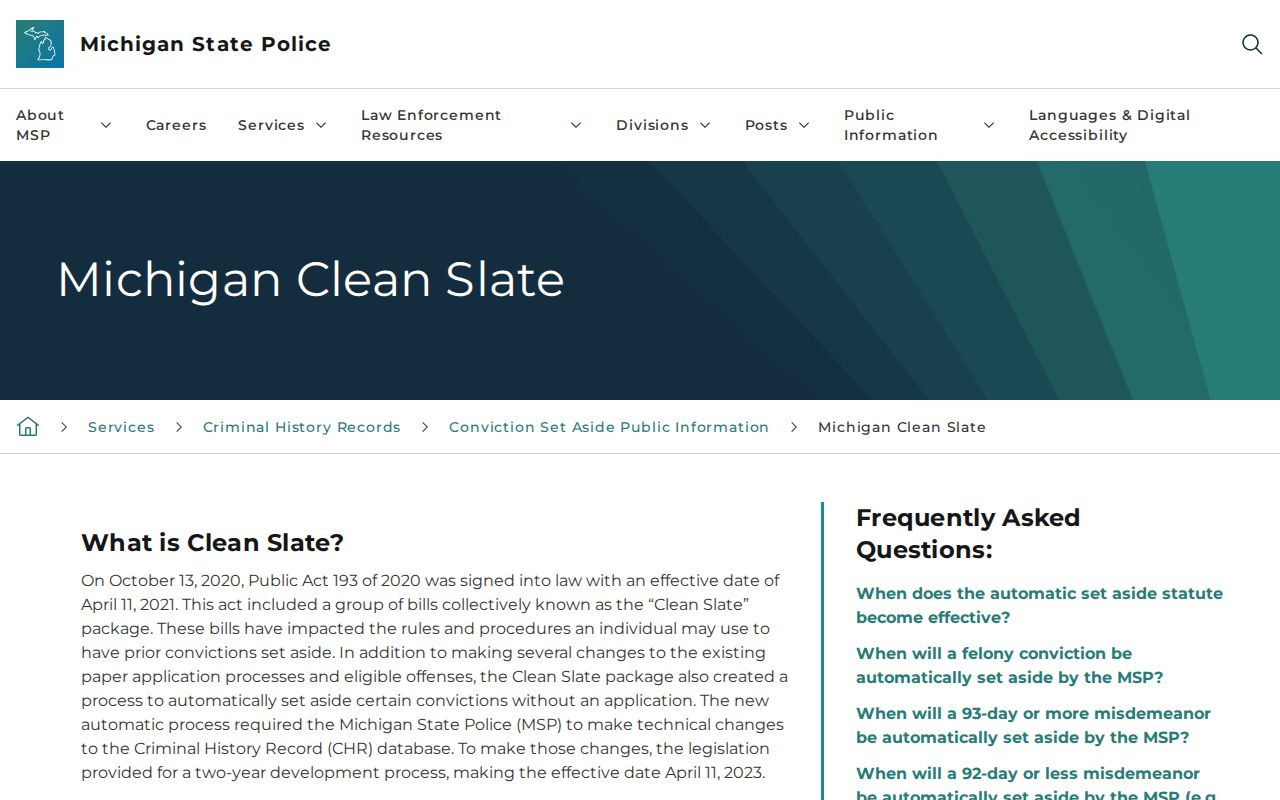
For a St. Clair County case that still appears after relief, confirm that the court and MSP processed the order, then use certified paperwork and MSP’s correction route.
St. Clair County Supervision Records
OTIS and the county jail roster answer different questions. The jail roster covers current local custody. MDOC’s Offender Tracking Information System covers public information on people under state prison, parole, or felony probation jurisdiction and generally those discharged within the prior three years. A person missing from OTIS may still have an older criminal record, a county booking, or misdemeanor probation through the 72nd District Court.
An OTIS result can show MDOC number, status, supervision location, offense and sentence data, aliases, descriptors, and dates tied to release, parole, or discharge. It is not the judgment itself. Check the sentencing court’s register of actions for the legal sentence, then contact the listed supervision office when official direction is needed. Conditions, treatment facts, case notes, and officer-safety data are not wholly public.
The MDOC Region 6 office directory identifies the St. Clair County probation office and the state supervision route.
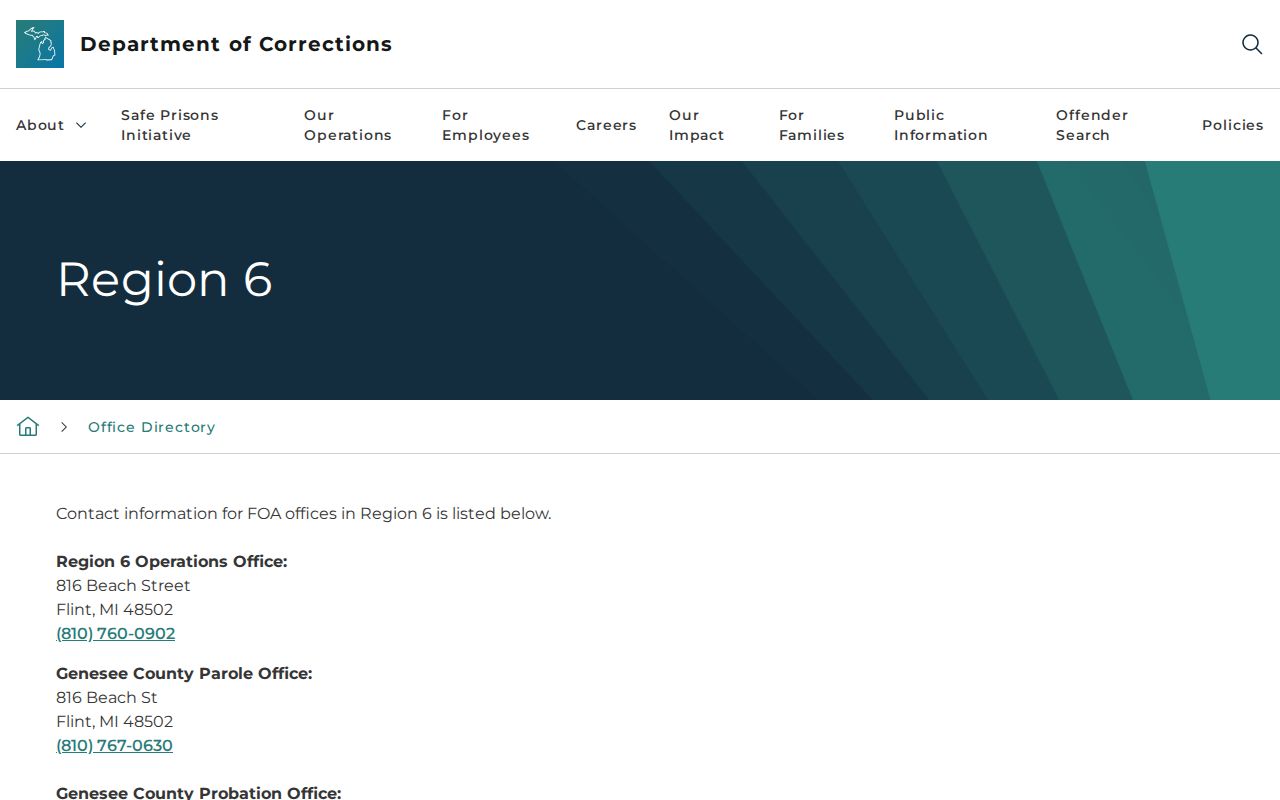
That office layer matters because felony supervision is run by MDOC Field Operations, while district-court probation handles misdemeanor cases within its authority.
St. Clair County Criminal Records by City
The county’s three largest incorporated cities are Port Huron, Marysville, and the City of St. Clair. Each police department creates and keeps its own city incident and arrest reports. None has a separate municipal criminal court. Port Huron and Marysville cases route through the Port Huron branch of the 72nd District Court, while City of St. Clair matters use the Marine City branch. Felony cases can later move to the 31st Circuit Court.
Port Huron Criminal Records
Population estimate 28,342 · City police reports, county booking, D72 court access, and C31 felony routing.
Marysville Criminal Records
Population estimate 9,868 · Marysville Police records connect to county jail and Port Huron D72 proceedings.
St. Clair Criminal Records
Population estimate 5,824 · City police reports route to county booking and the Marine City D72 branch.
St. Clair County Records History
The county’s record geography reflects two centuries of change. The sheriff’s office began in 1821. The first county jail opened in the City of St. Clair in 1827, and county-seat and jail work shifted to Port Huron in 1871. The modern correctional complex opened in 2006 and exceeds 200,000 square feet. Those milestones explain why older references may point to St. Clair while today’s main court and custody records center on Port Huron.
Local geography still shapes the records chain. St. Clair County includes about 115 square miles of water along Lake Huron, Lake St. Clair, rivers, canals, and the Flats. The Sheriff’s Marine Division began in 1964. Waterway or border events can involve agencies beyond the county sheriff, so a person tracing a report should identify the agency shown on the booking or court file before sending a request.
The FBI Crime Data Explorer is the official source for agency-level reported crime and arrest data.
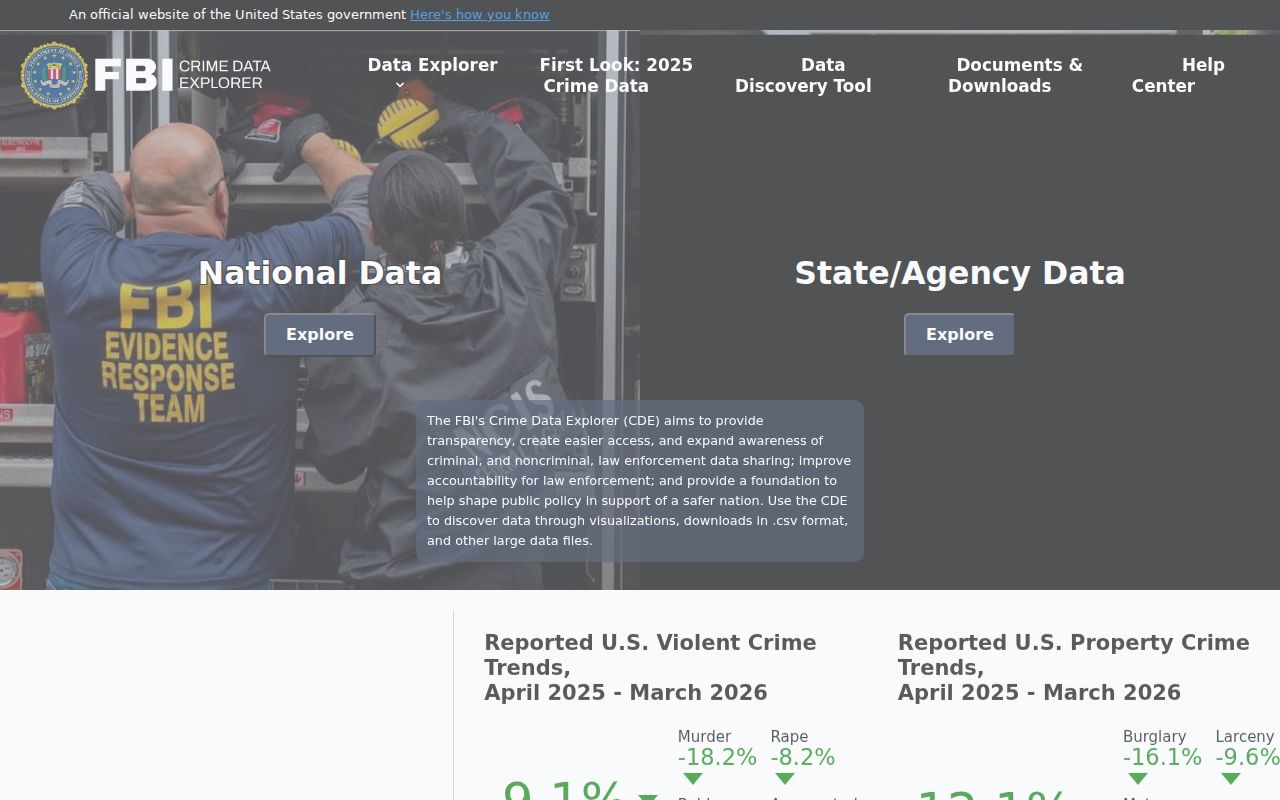
Use one agency and one complete year at a time. City and sheriff totals can overlap, and arrest counts measure enforcement events rather than convictions.
For federal self-review, the FBI Electronic Departmental Order portal accepts an identity-history application and still requires fingerprints.
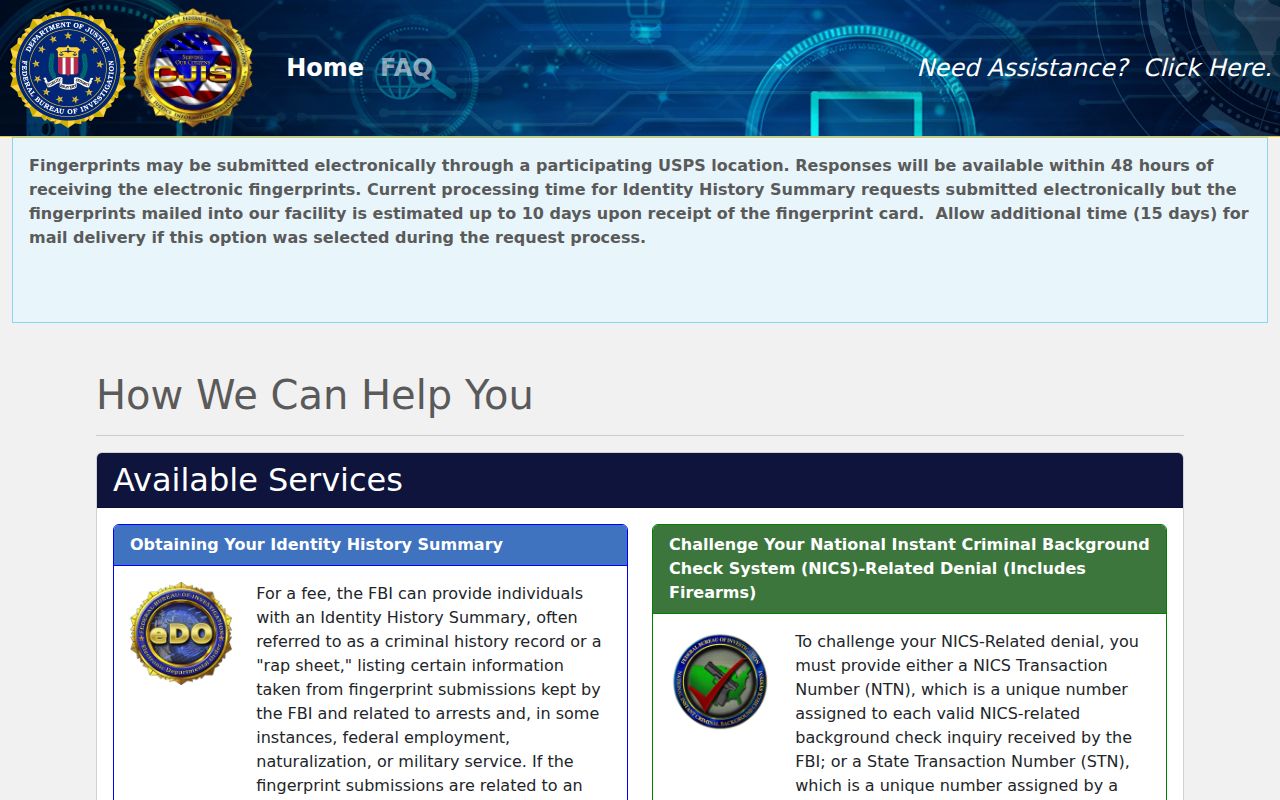
The federal result is distinct from St. Clair County court files, ICHAT, and county jail custody data.
MSP also publishes the fingerprint record-review and correction process for a person who needs to inspect or fix their own Michigan history.
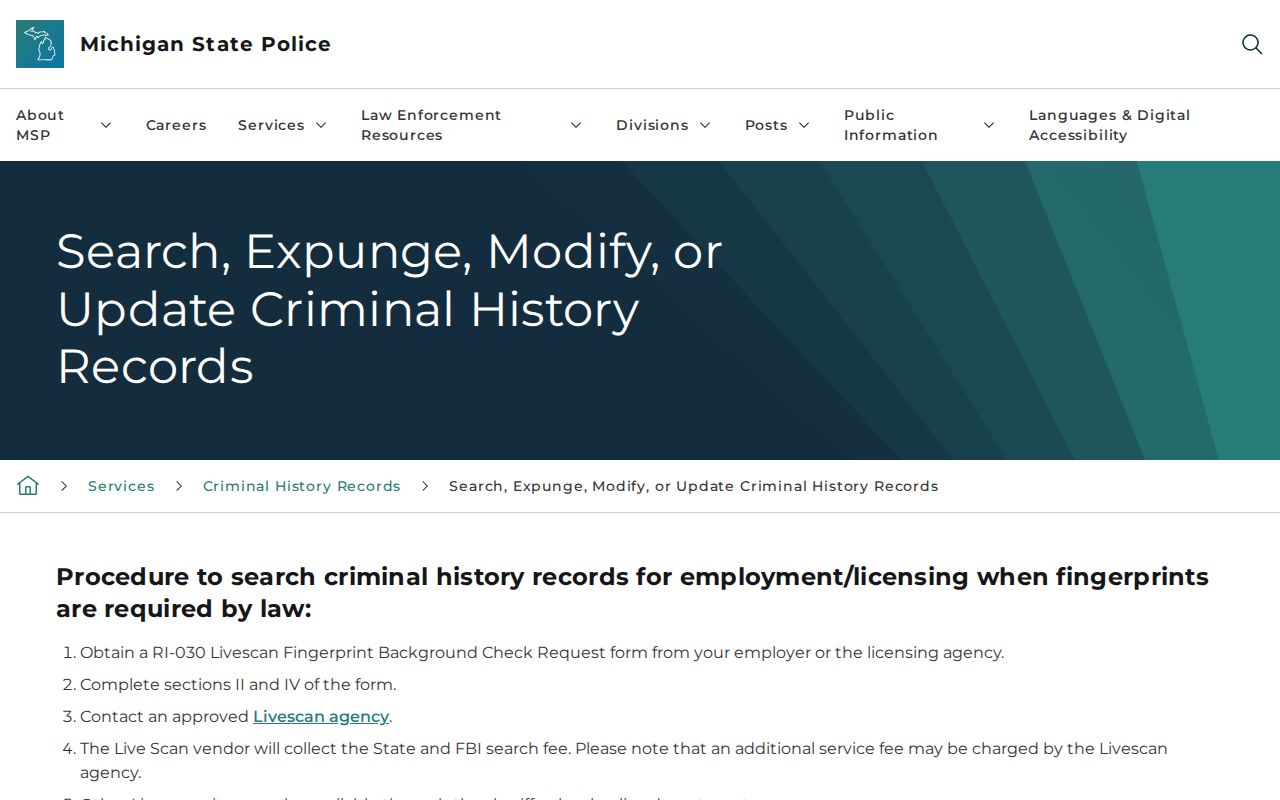
That identity-based process is the stronger path when a name search is unclear or a reported disposition is missing.